When does a System-on-Module make sense for drones?
If you’re in the business of building drones, there are many directions you can go when it comes to choosing a processor for your device. You likely won’t have trouble finding a chip that can process camera feeds, handle communications, and run AI workloads.
But before you even decide on a specific chip, a major choice you have to make is: do you build the entire compute platform from a bare processor on my own, or do you choose a System-on-Module that already has the processor, memory, and power design worked out?
Both approaches have their advantages. Chip-down design gives you the freedom to choose every component yourself and lay out the board exactly to your specifications. A SOM, on the other hand, can reduce the amount of processor-level hardware design required. It can allow more development effort to be focused on the parts of the drone that are specific to the application.
For UAVs, where power, space, environmental conditions, sensor processing, and development time all matter, this can make a SOM an interesting option.
Challenges in drone design
Designing drones, whether for industrial inspection, agriculture, logistics, public safety, or defence, forces you to think differently about embedded hardware. It requires you to consider constraints that many other products don't face. Those include:
Power consumption
Every watt used by the onboard computer comes from the same battery that keeps your aircraft in the air. A more powerful processor might complete a workload faster, but what if it uses more power and cooling than the application actually needs?
Difficult environmental conditions
Drones may be launched on a cold winter morning, or rest in direct sunlight before takeoff. They can also be exposed to constant vibration and repeated mechanical stress. The onboard electronics need to be designed for these conditions.
Size constraints
In a compact UAV, adding a few centimetres to a PCB is reflected in enclosure dimensions, centre of gravity, payload space, cooling, and even flight performance. An onboard computing platform needs to deliver enough performance without becoming dead weight.
Remoteness and unreliable communication
With drones, we cannot assume that a connection to a ground station or a cloud server will always be available. Many factors can limit connectivity in the air, from physical obstacles and environmental conditions to purposeful network interference.
Camera and sensor processing
Modern UAVs increasingly combine visible-light cameras with depth sensors, rangefinders, thermal cameras, and other sensors. Processing these requires significantly more compute than simply maintaining stable flight.
A System-on-Module can simplify some of these challenges by integrating the core computing platform into a compact module. The processor, memory, storage, and much of the associated high-speed design are handled at the module level, which can reduce PCB complexity and development effort.
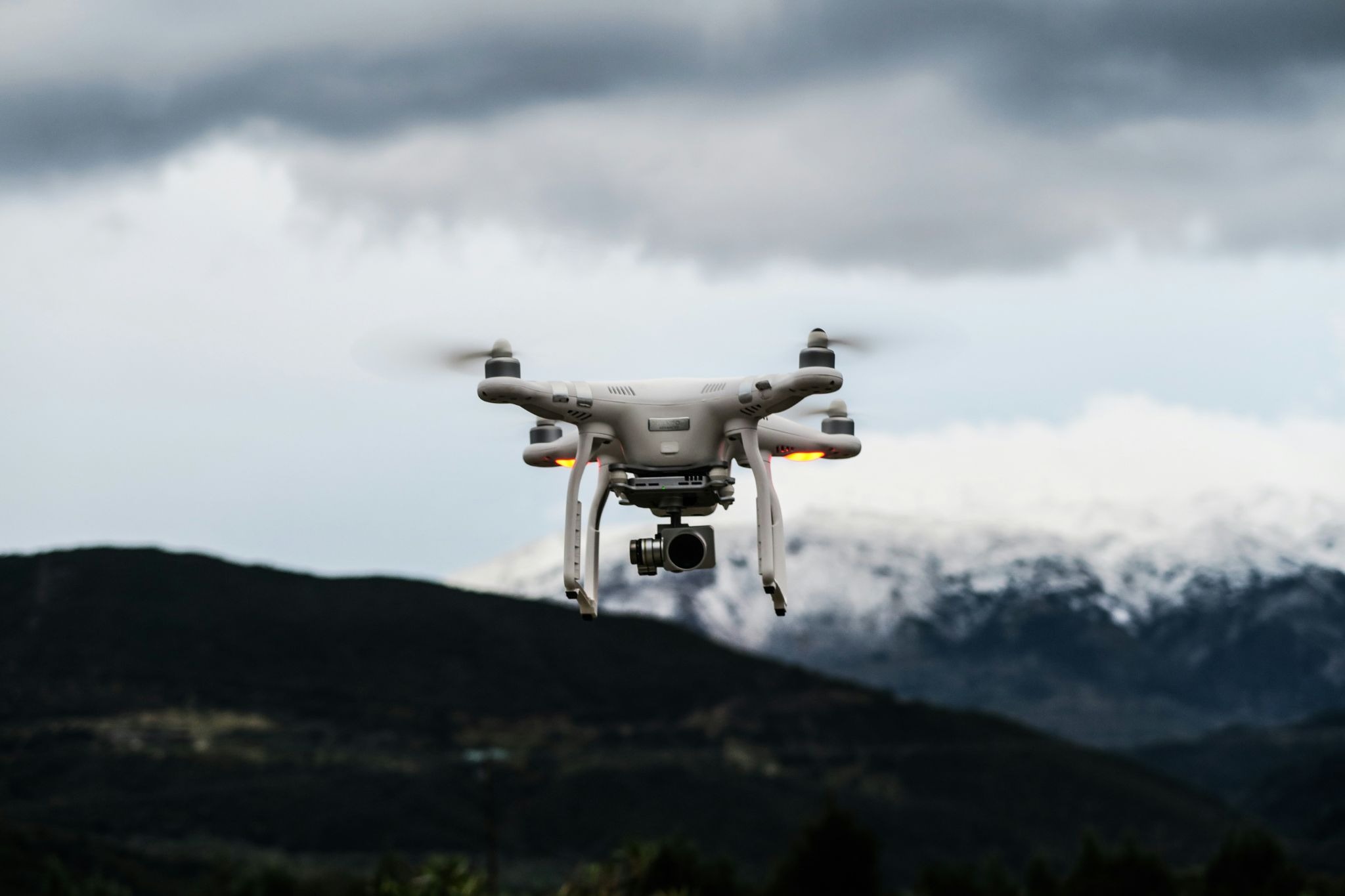
Beyond being compact, modern SOMs can also provide the onboard processing capabilities required by increasingly complex drones. Depending on the platform, they may include camera interfaces and dedicated hardware for image processing, video, and on-device (edge) AI.
Edge AI makes it possible to analyse camera data and run AI workloads directly on the aircraft, reducing reliance on a constant connection - while keeping general-purpose CPU resources available for other tasks.
For applications operating in demanding environments, there are also System-on-Modules designed to operate in extremely low or high temperatures.
Choosing a System-on-Module for drones
If you decide to go with a System-on-Module for your UAV project, the ideal choice will depend on the specific requirements of your product. Consider the amount of processing you need, the number of required cameras and sensors, available PCB space, expected operating conditions, and the target cost of the final device.
For the most demanding drone designs, you would generally go with a SOM built around a multi-core CPU with high-performance and efficiency cores, and a capable GPU. If your drone should process data on-device, e.g., to run an AI model that analyses footage without access to the cloud - then a dedicated NPU is a something you should look into.
These components - the CPU, GPU, and NPU - together with video acceleration and image-processing hardware - allow a drone to run demanding workloads in parallel without overloading a single part of the system.
When it comes to AI performance, it is typically expressed in TOPS, which gives an indication of an NPU's computational capability. For more compact, cost-sensitive, or mass-production-oriented drones, the highest possible TOPS figure isn’t the only thing to consider. A smaller SOM with a leaner CPU configuration, but still equipped with a dedicated NPU, can sometimes be a better fit.
A higher TOPS figure also does not automatically make one SOM faster than another in every application. Some modules offer stronger general-purpose CPU and GPU performance. Others place more emphasis on AI acceleration, power efficiency, or compact size. The better choice depends on your workload - our team can help you select the most appropriate solution.
Selected SOM vendors also offer pin- and footprint-compatible modules across different performance tiers, designed to fit the same carrier board. That gives UAV manufacturers more flexibility during development. You can prototype with one tier and move to another if testing shows that you need more or less processing power. The same carrier board can also form the basis of an entire product family, using different performance versions of the same SOM family.
Being first to market is key
How does building a drone with a SOM affect time-to-market? Let’s say we have two companies working on a new drone at the same time.
One decides to build the processor subsystem from scratch. Before its software engineers can start working with something close to the final hardware, the electronics team needs to design the processor, DDR memory, eMMC storage, power sequencing, and high-speed interfaces. After the first board comes back from production, problems are found during bring-up, and another PCB revision follows.
The other company chooses a production-ready SOM. The processor, memory, storage, and much of the high-speed design work are already done. Engineers can spend their time developing the carrier board, integrating cameras and sensors, and working on the features that actually make the drone different from competing products.
Depending on the complexity of the project, this can eliminate months of processor-level hardware development and reduce the risk of additional PCB revisions.
And those months matter. A product that becomes ready 12-18 months earlier may reach opportunities that otherwise would have already passed. This is particularly important in the defence sector, where requirements and procurement opportunities can change quickly.
The possibilities edge AI unlocks for drones
One of the biggest advancements in UAV design is that drones no longer have to send everything they capture back to another system for processing. With edge AI, they can make sense of camera and sensor data while they are still in the air.
A drone inspecting infrastructure, for example, could spot a potential defect as it flies past it, instead of recording footage for someone to review later. In agriculture, the same approach could help identify unusual crop conditions. In other applications, the drone might track movement or decide which images are worth sending back.
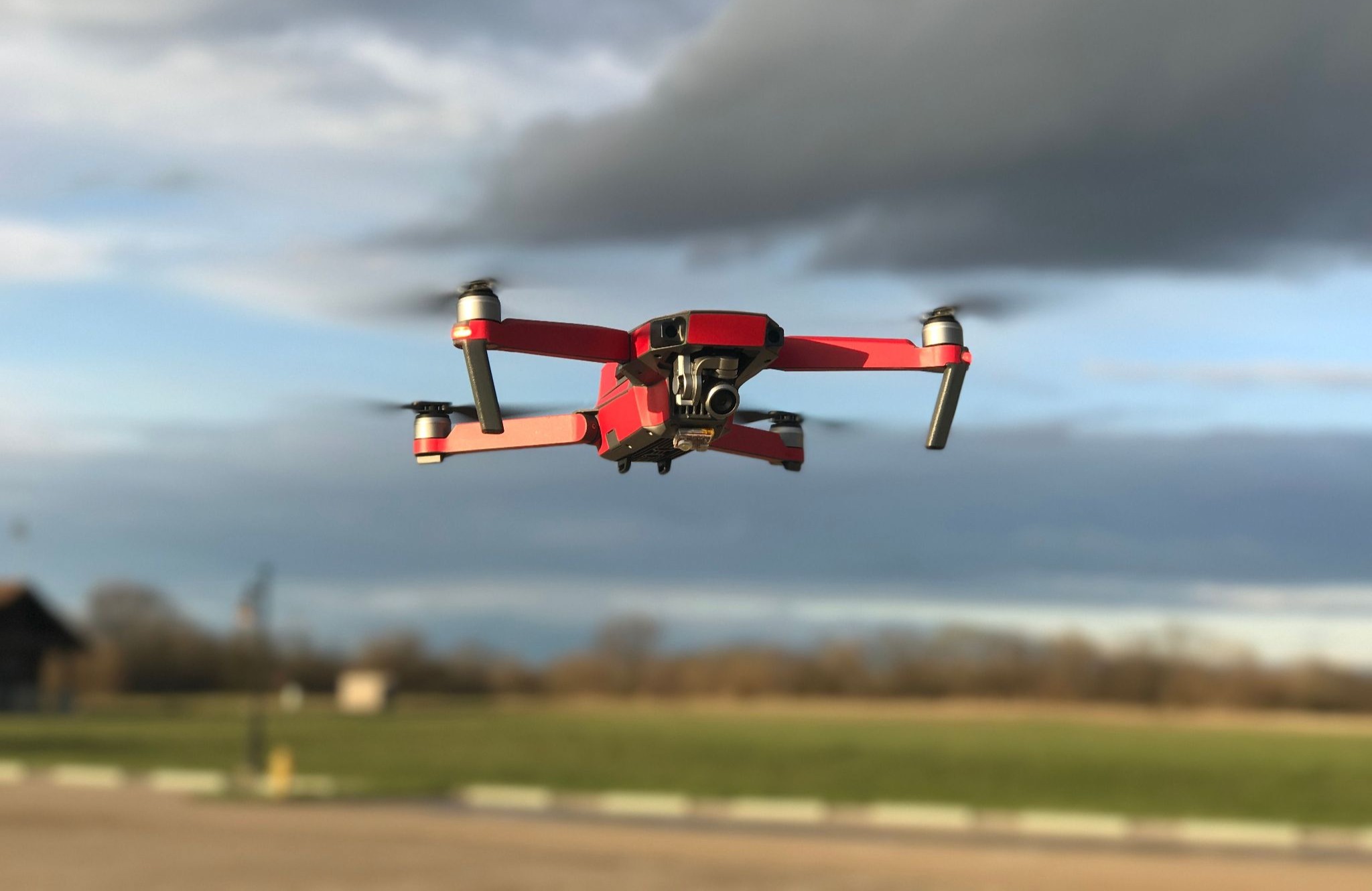
This matters most in areas with limited connectivity or poor bandwidth. Streaming high-resolution video continuously is expensive and can add latency. Local processing reduces that load. The drone can send the few images or alerts that matter, instead of everything that it captured.
Edge AI can also take on tasks closer to flight itself. Computer vision can help a drone avoid obstacles, navigate visually, or assist with landing. These workloads benefit from dedicated AI hardware because they often need to run quickly without relying on a remote server.
Modern SOMs increasingly include dedicated neural-processing hardware for this kind of work. Compatible neural-network workloads can run on an accelerator rather than relying entirely on the CPU.
For drone designers, this makes it possible to consolidate more of the system onto a compact computing platform. The same module can run the Linux application layer, handle camera data and local AI processing, while still exchanging information with the flight controller.
Making UAV design easier
Building a drone requires trade-offs between performance, power, size, weight, cost, and development effort.
A System-on-Module does not remove those trade-offs, and it may not be the right choice for every project. A chip-down design may still make more sense where maximum hardware control, highly specialized requirements, or very large production volumes justify the additional engineering work.
But for UAVs and their specific requirements, SOMs can reduce a lot of the complexity involved - and help you bring your product to market in a much shorter timeframe.
If you’re making these decisions for a drone project, our engineers can help you work through the hardware and software choices that will shape the final design. Talk to our engineering team about your application and the technical challenges you need to solve.



 Paweł Horbanowicz